Our office will be closed from 23rd December 2025 to 1st January 2025 in observance of the holidays. Regular business hours will resume on Monday, 5th January 2026. To ensure timely processing, please submit your orders by close of business on 8th December 2025, allowing us to accommodate shipping and lead times. For urgent matters during this time, please contact us HERE.
This summer, we asked for your most memorable fieldwork stories, and wow, did you deliver! While you can see the top five finalists here, there were just too many treacherous, heartwarming, and funny entries not to share.
Here, we present to you a selection of the most treacherous tales we received.
Rock Bottom, and Back Again
By Rachel Kostelnik
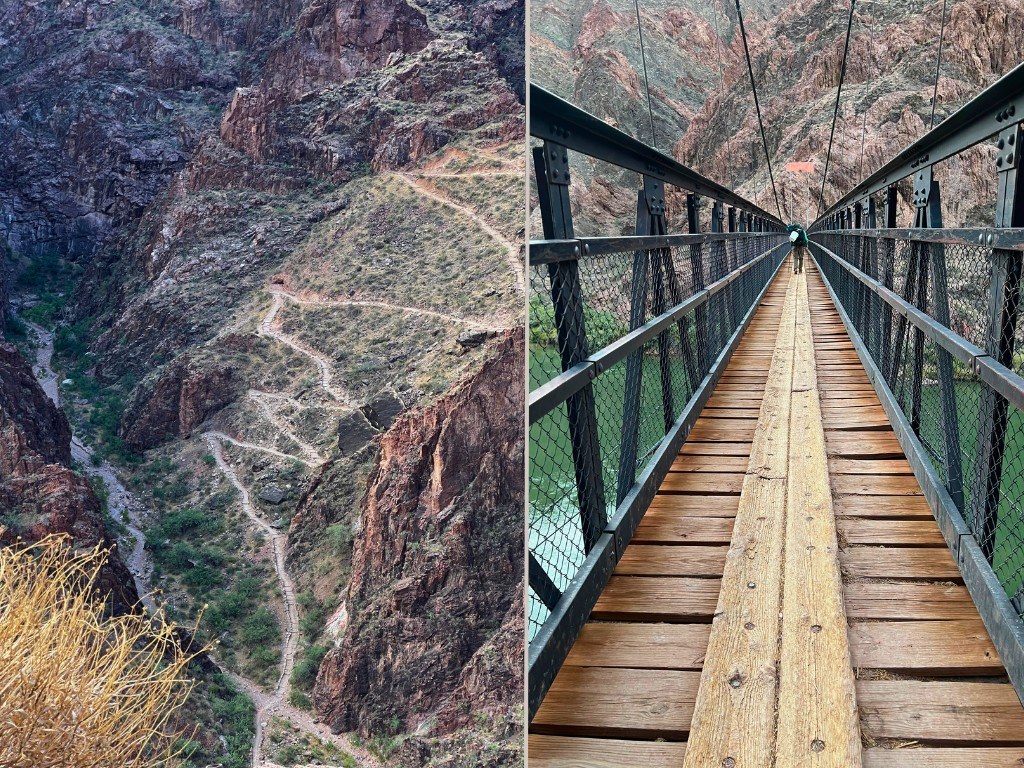
As an intern for the United States government, the summer right out of college, I (a not-very-experienced hiker) had to hike the Grand Canyon to get some samples from acoustic surveys, light traps, and drift nets at the canyon floor.
I had moved across the country for this job and borrowed some old government 40L backpacks, which, unfortunately, were a bit too large for my hips, causing me to topple like a turtle, slide out, and sprain my ankle. We were five miles down into the canyon, with two miles to go until we reached the bottom, and we didn't have enough water for the five miles back up.
Windspeeds were 30 miles per hour, so no helicopters were getting down there. So, I hiked five miles down, six miles around the bottom, and 11 miles back up—for a total of 22 miles on a sprained ankle in 118℉ with only 40L of water as an inexperienced hiker from New Jersey.
I wouldn't necessarily take that trail again, but I sure would go back with a better backpack!
Between a Puff Adder and a Hard Place
By Jan Philip Runge
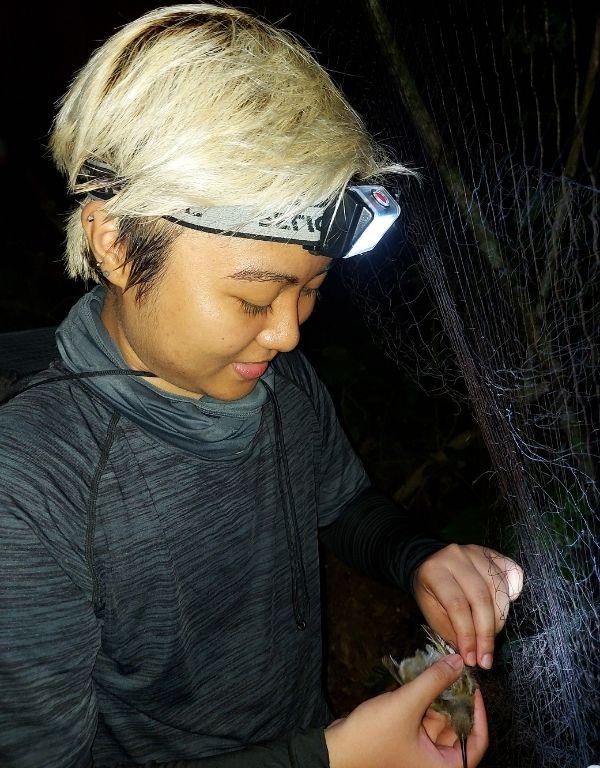
On the eve of my 33rd birthday, deep in the savannahs of northern Uganda, I had the closest brush with a stampede of buffaloes I'll ever want to have.I was in the middle of a six-week field research trip with the NGO Fauna Forever, focusing on birds and bats. We had reached our fourth and final site near Kidepo National Park, close to the South Sudanese border. That night, like every other, we were out mist-netting for bats. Our nets were set up in a small valley, about 1.5km (roughly one mile) from camp, and as usual, we were accompanied by two armed rangers - mandatory given the abundance of large animals and the risk of incursions from across the border.
At first, things were quiet. Our head field research coordinator and I didn't have much to do since our net wasn't catching any bats. Then, a call crackled over the radio: a large snake had been spotted near another net. He is a professional herpetologist, and I'm a huge reptile enthusiast, so without hesitation, we sprinted over. It turned out to be a sizable puff adder: beautiful, dangerous, and absolutely worth the rush.
The only problem? Our snake bagger and hook were still back at camp. I volunteered to fetch them and set off with one of our rangers. In addition to the gear, we also picked up another volunteer at camp who had gotten wind of the puff adder and wanted to tag along.
About a kilometer from camp on the way back to the nets, my eyes caught something at the edge of my field of vision: 20-30 pairs of glowing green eyes moving across our path just 20 meters ahead. After five weeks in the savannah, I had learned to read eye shine and movement patterns. These, I thought confidently, were herbivores. Probably small antelopes, which were abundant at this site.
With a touch of excitement, I turned to my companions: "Hey, look!"
But something was wrong. I had never seen the local antelopes move in such large groups. They usually didn't make that much noise either. And our rangers never froze in place when we encountered them.
With a sharp click-clack, he released the safety on his Kalashnikov and whispered: "Shine the light, I need to see!"
I focused the beam of my headlamp, and there they were: a herd of buffalo, now halting in front of us, unsettled by the sound and the glare.
Immediately, my mind went through ways to handle the situation. Retreat slowly and circle around; if they get aggressive, climb a tree; if there is no tree, lie flat.
The ranger had other plans. Without warning, he fired a shot into the air. My ears rang. The buffaloes shuffled uneasily but did not flee. A second shot only agitated them more. By now, the ranger was retreating backwards, muttering "Back! Back! Back!" before sending another bullet skywards. Third time's the charm, and the herd finally started moving. Unfortunately, not away from, but right at us.
Yelling "RUN!", the ranger turned on his heels and heeded his own advice. The three of us bolted towards the only tree close at hand, a thunderous stampede closing in behind us. The other volunteer, having walked a few metres behind the ranger and me before we encountered the herd, reached the tree first but struggled to get up. Weighing my options, I dashed past and practically teleported onto the branches (tree climbing being one of my underrated talents), intending to pull him up. Apparently, though, the ranger had had a similar idea and now occupied the branches below me. As the buffaloes crashed past, he managed to guide the other volunteer up the tree.
The three of us clung to the swaying branches of the admittedly not very tall tree. Somehow, luckily, it held.
We stayed put for a few minutes, letting the savannah calm down. Then we climbed down, retrieved the snake gear I'd dropped at the base of the tree, and carried on to the nets.
And yes—the puff adder was still there, waiting to be bagged.
Two hours later, as midnight rolled past, I entered my 33rd year of life—happy, healthy (or so I thought, unaware at the time that I had contracted leishmaniasis on my last trip to Peru in December), and very much alive. And with one hell of a story to tell.
From Hotels to Hillsides: My First Fieldwork Adventure
By Beatrice Hipolito
I’ll never forget my very first fieldwork experience.
For almost two months, I’d been comfortably conducting workshops in hotel conference rooms, air-conditioned, coffee on tap, predictable schedules. Then, one day, my team lead suggested that I join our field crew for a post-disaster assessment. Totally unprepared and still in my relaxed, hotel-mindset, I said “yes” without hesitation. Finally—a chance to turn theory into practice!
I didn’t even own proper field gear. My colleagues generously loaned me their essentials: a field bag, sleeping bag, tent, headlamp—even dri-fit shirts. I had to make a quick trip to the local flea market to pick up some second-hand hiking pants. At the time, my suitcase was full of jeans and polo shirts. But, luckily, I had already purchased some cheap hiking shoes beforehand in anticipation of possibly going on field work.
Then came Day One. We hiked down a mountain from our base camp, then up another mountain to begin the survey. After that? Back down and back up again. That’s when I realized I really have to go to the gym more often.
I didn’t even make it through the full two-kilometer transect. At one point, we hit a stretch that required semi-rock climbing (and, if I’d pushed through, we would’ve been finishing in the dark). To top it off, my teammate and I got slightly lost on the way back to camp, but we did discover a new plant species, so…accidental win?
By the time we returned, my back gave out. I lay down in my tent to rest before dinner and never got back up. I ended up eating biscuits while lying flat, staring at the roof of my tent, questioning my life choices.
Fast forward three years, and I’ve been through more than I ever could have imagined: I’ve nearly fallen off cliffs into pitch darkness, been chased by wasps through mangroves (barefoot), and once had to dig my fingers into the side of a mountain just to keep climbing—all in the rain.
Oh, and that first fieldwork adventure? It ended with us evacuating due to a “red” rainfall warning, risking getting caught up in a landslide, crossing 15 rushing rivers just to reach a construction truck that would carry us all to safety.
Today, we laugh about these moments. They make for great stories and unforgettable memories. But looking back, I’ve realized one thing: There’s no risk we won’t take when it comes to doing the work for nature—and for the people who depend on it.
Amazon Tales: Aguas Calientes, Amazon Rainforest, Peru
By Rafael Diogo
To submit a tale here, I have to go back to my jungle diary memories. I could tell funny stories, like monkeys trying to steal my microphones, or hearing mammals nibbling and sniffing at my rigs, but I will share one of the life-threatening ones that I will never forget.
During my time in the Peruvian Amazon, the days were hot, sweaty, and relentless; yet, the nights were some of the most immersive experiences of my life. I had never heard such a symphony of sound; a living opera of animals, insects, and caimans gliding through the river, echoing across the breathing darkness, weaving together the heartbeat of the jungle.
I had just arrived from the Colombian Amazon, where I experienced my first ayahuasca ceremony. Knowing I would soon be lost in the visions, I set up my mics beforehand to record sounds for 24 hours, capturing every note of the ritual and every vibration of the forest. When the ceremony began, the bitter brew took hold almost immediately. My body shivered, my mind expanded, and I felt the jungle itself pulse with life beneath my skin.
At first, darkness swallowed me. Shadows twisted into impossible shapes, and I felt as if I were falling through layers of time. The air around me hummed with whispers of unseen creatures, and the icaros of the shaman wove invisible threads through my consciousness. Slowly, a portal opened before my eyes, a myriad of pulsating, colour-drenched universes stretching into infinity. Within them, I glimpsed spirits of the jungle: glowing amphibians with molten-gold eyes, insects shimmering like tiny suns, and rivers flowing with liquid light.
And then, she appeared: the serpent. A hypnotic spiral of green and brown, twisting and observing, eternal and patient. She coiled around my visions like smoke, her gaze deep and knowing. She was dangerous and beautiful, a guardian and a warning intertwined. At the time, I did not know why this vision would linger in my memory, but soon she would meet me again in the flesh, offering life and demanding respect.
A week later, I embarked on a four-day cargo boat journey from the Colombian Amazon to the Peruvian Amazon, surrounded by the vast, green wilderness. The river stretched endlessly, carrying me deeper into the heart of the rainforest. The jungle's pulse and the memory of the serpent from my visions accompanied me, each bend of the river reminding me that the wild does not forget.
In Peru, I stayed with a Shipibo family, learning about medicinal plants and placing recording rigs across the forest. Yet I longed for deeper, more immersive sounds. I ventured to a natural park famed for its mystical river, Aguas Termales, where hot and cold waters meet, and jaguars leave paw prints etched into the soft, damp soil.
Alone, I asked the guide if I could stay overnight. He frowned, warning that it was too dangerous, suggesting the entrance bungalow. I declined. My destination was a remote, open hut, an hour deeper into the jungle. Heart racing, I packed my hammock and recording gear and ventured alone. My first mistake, but the call of the unknown was irresistible.
The path mesmerized me. At the river, I bathed naked, letting scalding and icy currents clash across my skin, as if stepping into a living soundscape. Peace reigned until night fell. Rain poured. I was forced to record inside the hut. My lighter broke, no mosquito spirals. Pitch-black chaos. The storm roared. Muffled voices drifted through rain and river noise. I swatted bugs, dodged swooping bats, and watched hundreds of cockroaches take refuge around me.
Exhausted, I waited for dawn. Wet and grumpy, I wandered back into the heart of the jungle, mesmerized by roots forming natural, winding paths. Then I saw her, the serpent from my visions: elegant, long, greenish, and venomous. Reflexes sharpened by memory, I leapt aside just as she snapped. In my sudden jump, my portable recorder flew into the air and landed in a tangle of bushes, but miraculously, it was still recording, capturing the hiss of danger and my pounding heart. That vision, a week earlier, had given me the edge; the two extra seconds I needed to survive. I dropped to the ground, keeping a safe distance, and silently thanked her for sparing my life. She lingered, grumpy and aware of her mercy.
Lesson learned: Never grow comfortable in the jungle. Every recording that day—the roaring storm, the possibility of a jaguar seeking refuge in the hut, the hiss of danger from the serpent—was more than a craft. It was a conversation with life and death, a symphony of the wild. A reminder that the jungle speaks in whispers, roars, and hisses, and only those who listen truly survive.
The Bog, the Boat, and the Moose
By Alison Forde
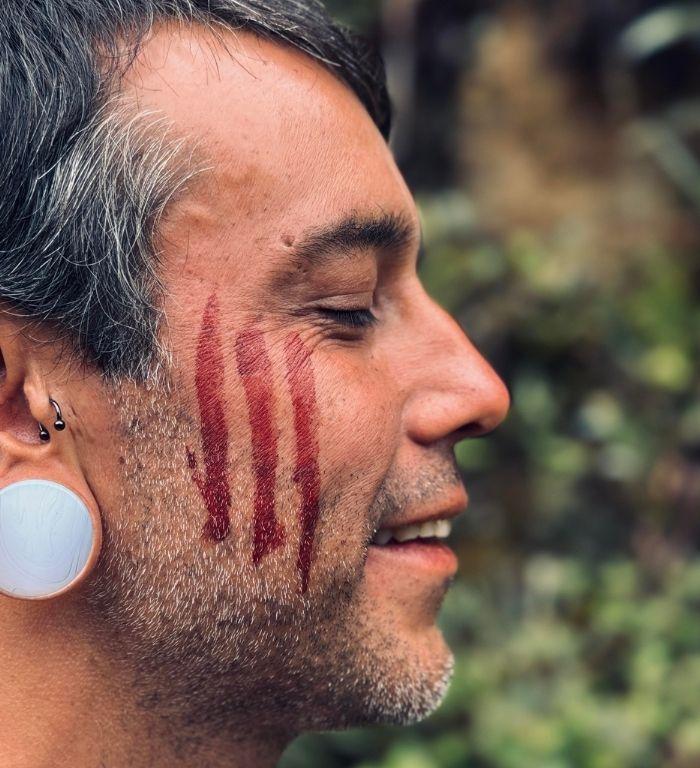
In 2017, I had my first experience conducting a full summer of remote fieldwork. May was mostly spent conducting visual encounter surveys for snakes and turtles, but once June hit, I was also tasked with deploying SM3BAT units, each equipped with a car battery to last the maternity roosting period.Junior staff are often given the least desirable sites, and on this particular day, I was transported by pontoon boat to the edge of the study area and had to hike nearly 10 kilometres to set up one bat station. But it was the Friday before a planned two-week vacation, and I was looking forward to heading home that night, so in decent spirits, regardless.
During the morning meeting with other staff, I was given the equipment to load into my backpack and teamed up with a local resident to help navigate and also provide bear protection. I hadn't worked with this individual before, but trusted his knowledge of the land. Anyway, once we landed on shore, I showed him the location on the map and plugged in the coordinates to my GPS to keep a heading. The terrain was relatively rugged, so it took us half of the day to get there.
Once we arrived, I pulled the monitoring equipment and battery out of my backpack, happy to lighten the load. However, when I started putting it together, I discovered that the microphone had not been included. So, back in my bag it all went.
My guide was frustrated by the length of time it was taking and insisted on a particular route back to the shoreline. He led us straight into a bog, where I soon found myself chest-deep, waterlogging my cellphone. It ended up taking us even longer to get back to shore, where we were met by our pontoon boat, which happened to run out of fuel about a third of the way back. Another craft had to come out with a jerry can to rescue us.
It was well past dinnertime once we made it back to basecamp, and I was ready for the 3.5-hour drive home, but of course, on the trail leading out to the main road, a cow moose and her twins had other plans, firmly standing their ground while browsing along the trail edges. The whole day was a reminder to always double-check the equipment you're provided with has all the necessary components (and programming!) and that becoming frustrated or flustered never gets you anywhere faster.
In the spirit of reconciliation, Faunatech acknowledges the Traditional Custodians of Country throughout Australia and their connections to land, sea and community. We pay our respect to Elders past and present and extend that respect to all Aboriginal and Torres Strait Islander peoples today.
Join our mailing list to get notified about upcoming training opportunities, live webinars, quarterly grant offerings, product releases, and more.
Thank you for signing up to our mailing list.
You can unsubscribe or change your email settings at any time by clicking "Manage Preferences" link at the bottom of any mailing list emails we send you.
