Long-Term Acoustic Monitoring Helps Protect Murray-Darling Wetlands
Project
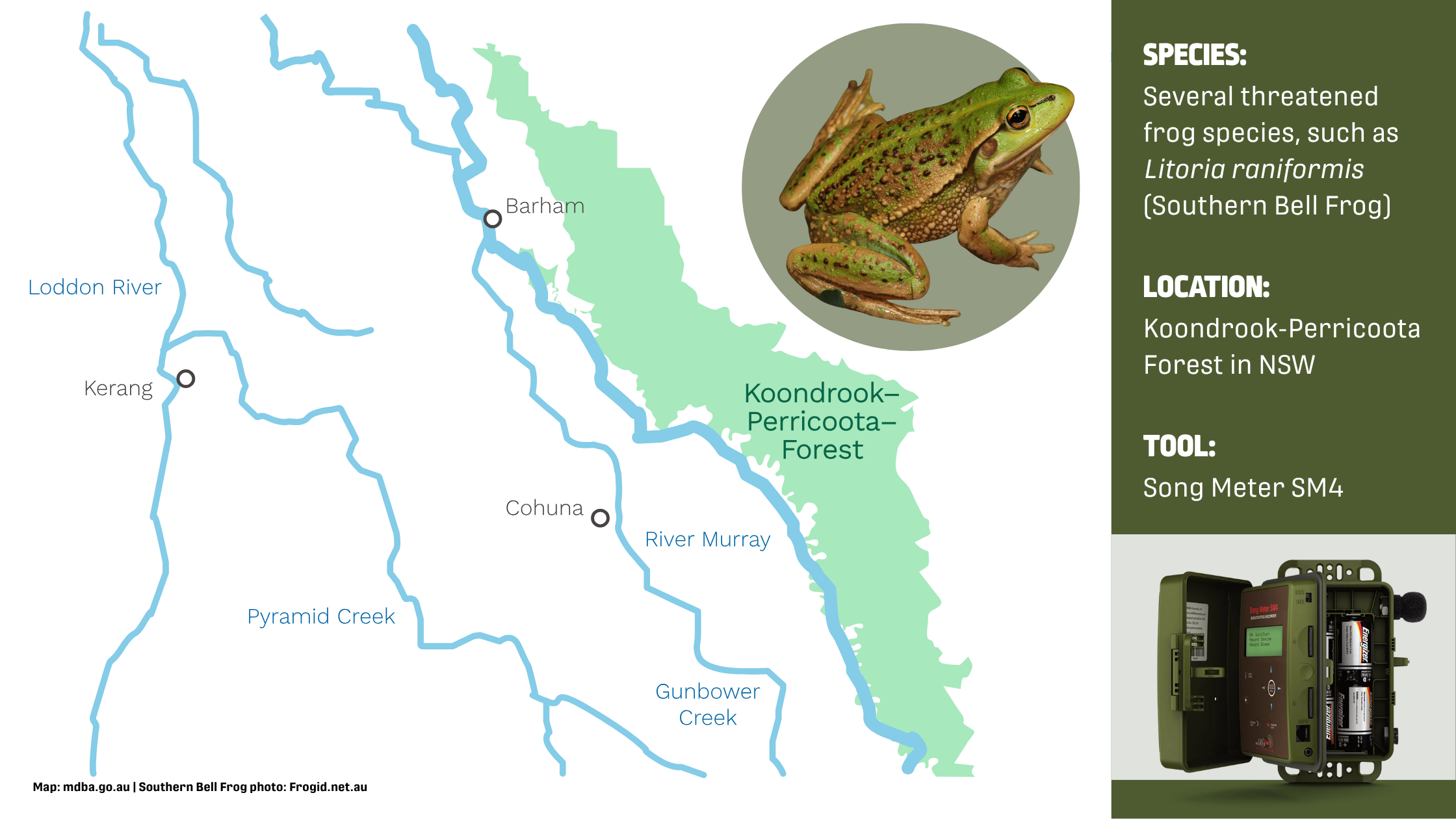
An acoustic monitoring program in the Murray-Darling Basin has used Wildlife Acoustics Song Meter SM4 recorders to track frog populations as indicators of wetland health for more than 10 years. Run by Forestry Corporation of NSW across the Koondrook-Perricoota Forest, the long-term project monitors seven target frog species across a network of wetland sites, generating data that helps inform how limited environmental water is allocated along the Murray River.
Solution
Durable, low-maintenance SM4 recorders have sustained one of the Basin's most extensive frog datasets—through floods, heat, and shifting site conditions—and demonstrated why long-term monitoring matters for protecting Australia's floodplain ecosystems.
Project Outline
For more than a decade, a long-running acoustic monitoring program in the Murray-Darling Basin has helped researchers and land managers better understand wetland health across one of Australia’s most significant floodplain ecosystems.
Operating under Forestry Corporation of NSW and funded through a Murray-Darling Basin initiative, the project uses Wildlife Acoustics SM4 recorders to monitor frog populations across remote wetlands and floodplain forests. The data gathered at the sites help inform environmental water management decisions and provide critical evidence for the ecological value of these habitats.
The sites encompass areas of high conservation value: the floodplains, wetlands, and forests along the Murray, the Murray’s estuary, and the river itself.
The Living Murray Program is a joint initiative of the Australian Government and the governments of New South Wales, Victoria, and South Australia. The program is coordinated by the Murray-Darling Basin Authority. The Living Murray icon sites are important locations along the River Murray selected for their ecological and cultural significance.
More specifically, the Koondrook-Perricoota Forest is part of the NSW Central Murray Forests Ramsar site. The forest is a place of ecological diversity, rich with Aboriginal Cultural Heritage, and a place for community and industry to thrive and work together. The Barapa Barapa and Yorta Yorta are the Traditional Owners of the land on which Koondrook-Perricoota Forest is located. The forest is lush with cultural artifacts and sites, including many areas of significance.
Monitoring Wetland Health Through Sound
The project focuses on four main elements: frog species richness across sites and habitat types; patterns of frog species richness and calling activity over time; species presence in relation to water presence at sites; and estimates of acoustic recogniser performance per species.
There are seven target frog species across a network of wetland monitoring sites distributed throughout the Murray River floodplain region. Frogs are considered important environmental indicators because their presence and breeding activity reflect the overall health and productivity of wetland ecosystems.
“Frogs are a really good indicator of wetland condition,” Shelby Taggert, the project officer, explained. “If you’re hearing all seven species, alongside healthy bird activity and productive aquatic systems, those sites are considered ecologically productive.”
Over the duration of the monitoring program, the devices operate across 23 sites using Wildlife Acoustics Song Meter SM4 recorders. Site locations can change depending on environmental water availability, flooding events, and seasonal conditions.
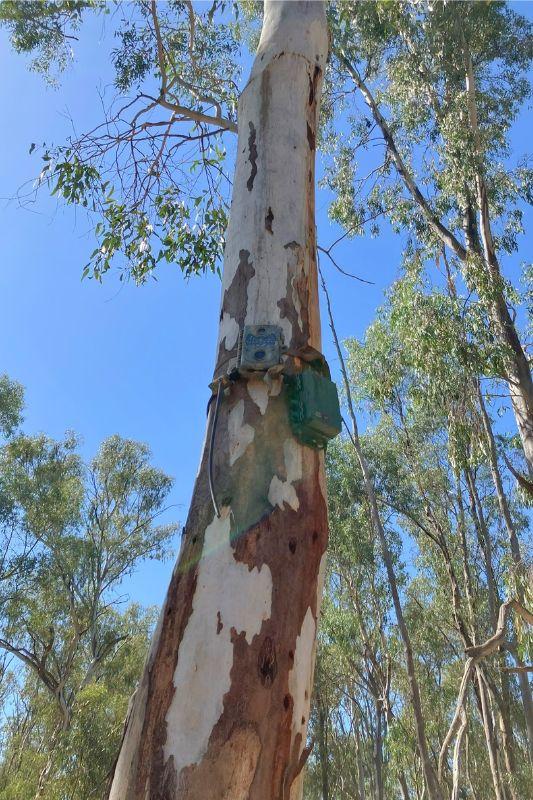
Each recorder captures one minute of audio every hour, on the hour, continuously for approximately six months. The recordings are then processed by the Arthur Rylah Institute (ARI), where recognisers and AI deep learning tools help identify frog calls across the vast dataset.
The combination of automated analysis and manual review has proven especially valuable.
“Some endangered species have only been detected through manual listening because the recognisers are still being strengthened and perfected, due to the lack of available strong clean calls,” the team noted.
Between 2024 and 2025, 18 SM4s recorded for an average of 152 nights (five months) each, ranging from 18 to 189 nights, capturing the spring-summer period when calling and breeding by most frogs in the region peak. An average of 60.8 hours of acoustic data was recorded per site. The final acoustic dataset totalled 65,699 files, 213 GB of data, and 1,095 hours of audio.
Supporting Environmental Water Management
Unlike many research initiatives designed to solve a specific ecological problem, this program exists as an ongoing requirement to assess and report on floodplain forest conditions throughout the Murray River region.
The acoustic data plays an important role in environmental water applications and management planning. Monitoring results help demonstrate where wetlands are supporting breeding birds, native vegetation, and threatened frog populations, providing evidence that can strengthen proposals for environmental water allocations.
“Accessing environmental water is managed through a prioritisation process by State and Commonwealth water holders. As you can imagine, there is a limited water resource to be shared across the many significant wetland assets within the valley,” Shelby explained. “The monitoring gives us the data needed to help justify why certain wetlands need water, during annual planning.”
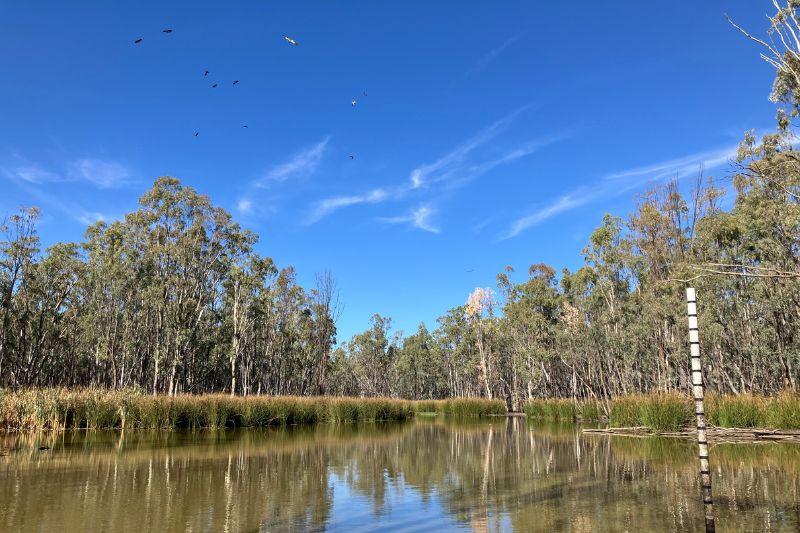
One wetland site, Pollack Swamp, is actively supplied through managed pumping systems, where water must be pushed across floodplains to maintain habitat quality during dry periods.
Although recent dry years have limited ecological outcomes, the project continues to detect species such as the Southern Bell Frog (Litoria raniformis), providing valuable long-term trend data for government agencies and environmental managers.
Working Across Challenging Landscapes
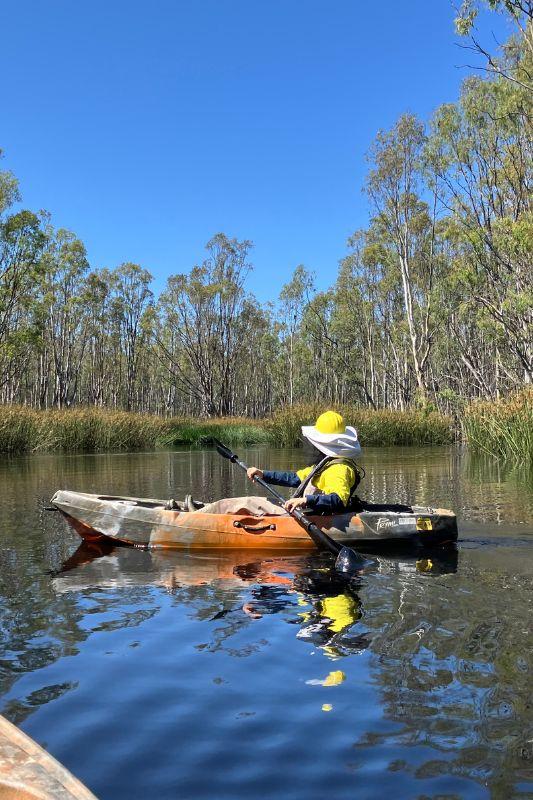
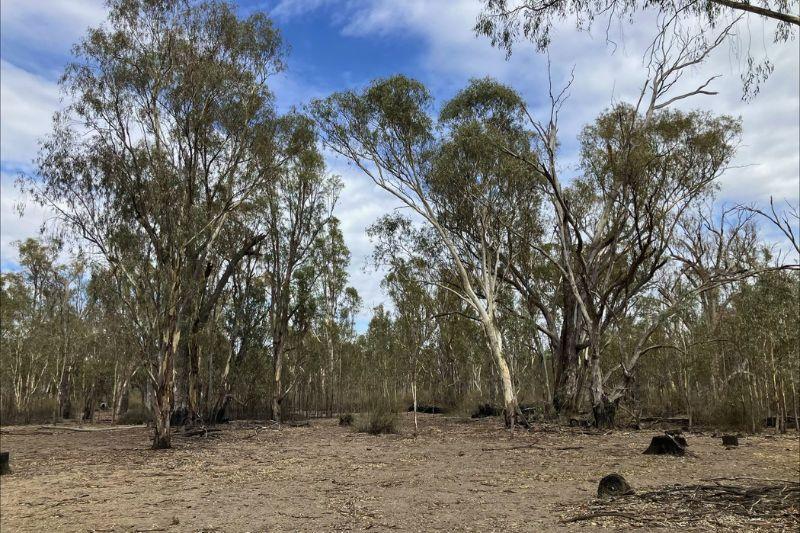
The geography of the project presents significant logistical challenges. The network spans approximately 32,000 hectares of floodplain forest, requiring access by vehicle and Argo vehicles depending on seasonal conditions, with some years requiring kayak access to the sites.
During the 2024–25 field season, acoustic data were recorded at 18 sites across Koondrook-Perricoota Forest. Seventeen of the sites had been monitored in previous years (for an average of six years each), and one site was monitored for the first time in 2024–25.
Sites were spread across four different habitat types (primary wetlands, secondary wetlands, river lagoons, and borrow pits), with 4–5 sites in each habitat type.
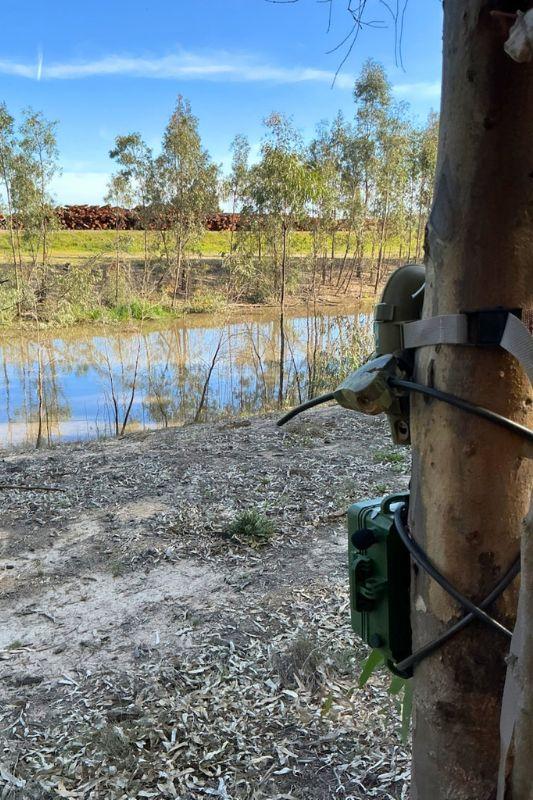
Song Meter SM4 recorders are deployed in harsh outdoor conditions for extended periods, often exposed to heat, flooding, and long periods of direct sunlight. Despite the demanding environment, they have remained reliable throughout the project’s duration.
Maintenance remains relatively straightforward. The team services units annually by cleaning them and replacing seals before redeployment.
The project also integrates camera monitoring alongside acoustic data collection to document vegetation changes, predator activity, and seasonal habitat dynamics.
A Small Team Delivering Long-Term Insights
Despite the scale of the monitoring effort, the project is managed by a relatively small team. Forestry Corporation of NSW operates deployments with approximately three staff members, while ARI contributes another two to three personnel focused on audio analysis and processing.
The project began in 2014 with six Song Meter SM3 recorders and, over time, expanded to more than 20 units. Today, the monitoring program continues with 18 SM4 recorders deployed annually.
“There’s no planned end date to the project and we will continue monitoring to collect vital data to understand the inner workings of wetlands,” Shelby said.
The long-term consistency of the monitoring effort has become one of its greatest strengths. Compared to other Murray-Darling Basin monitoring locations, the project now provides a uniquely extensive frog dataset with highly repeatable methods and multi-year ecological insights.
Flexible Tools for Adaptive Monitoring
One of the key lessons learned throughout the project has been the importance of flexibility in field deployments.
“If something isn’t working at a site in regards to noise or visibility, you can simply move the recorder,” Shelby said. “That flexibility has been really important.”
For organisations considering similar monitoring programs, the team emphasised the value of simple, durable equipment that can adapt to changing environmental conditions.
As climate variability continues to affect floodplain ecosystems across Australia, long-term acoustic monitoring programs like this one are becoming increasingly important for understanding ecosystem response, supporting environmental management, and protecting critical wetland habitats for future generations.
With the ongoing nature of the project, the team is excited to see the new Song Meter SM5 recorder and what it can deliver for the initiative.
The industry-standard Song Meter SM4 powered this decade-long monitoring program, proving reliable through floods, heat, and years in the field. Chat with us today to find out if it’s the right fit for your project.
In the spirit of reconciliation, Faunatech acknowledges the Traditional Custodians of Country throughout Australia and their connections to land, sea and community. We pay our respect to Elders past and present and extend that respect to all Aboriginal and Torres Strait Islander peoples today.
Join our mailing list to get notified about upcoming training opportunities, live webinars, quarterly grant offerings, product releases, and more.
Thank you for signing up to our mailing list.
You can unsubscribe or change your email settings at any time by clicking "Manage Preferences" link at the bottom of any mailing list emails we send you.
